

Key Takeaways
- Stress doesn’t create acne on its own, though it can make breakouts you already have worse.
- Stress can slow skin healing, so pimples may last longer than usual.
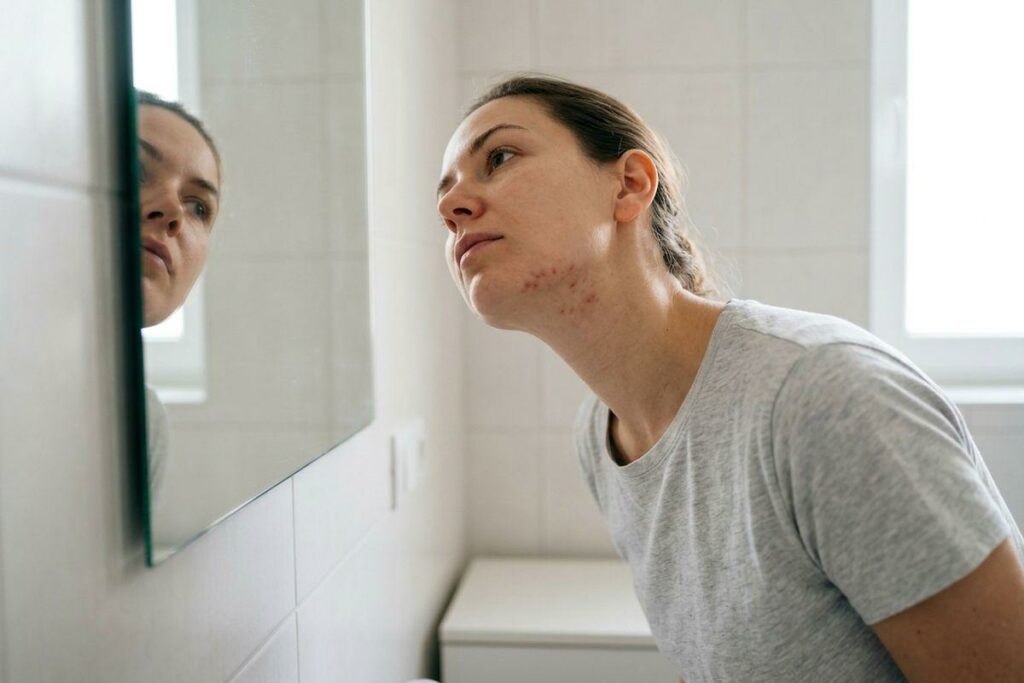
- Stress breakouts often appear suddenly and can cluster along your jawline, chin, or forehead.
- Gentle cleansing, steady sleep, and regular movement may help calm flare-ups.
- Red, gritty eyelids during a stressful stretch are worth mentioning to your optometrist.
A big deadline, a hectic workweek, or even moving across town can sometimes come with an unwelcome surprise: a fresh breakout. If you’ve noticed your skin acting up during stressful periods, you’re not imagining things! 😩
At Sea View Optometry, skin and eye concerns often come up in the same conversation, which is one reason our aesthetics and skin care services sit right next to our eye care.
Stress doesn’t cause acne on its own, but it can make existing breakouts worse and slow down how quickly they heal. The good news? A few small changes to your daily routine may help your skin settle down, even when life gets busy.
How Stress Affects Acne
Think of stress as an amplifier rather than a starting point. If your skin already leans toward clogged pores, a rough few weeks can turn a small spot into something redder and more stubborn.
Stress can also make it harder for your skin to heal. A pimple that would normally fade in a few days may stick around for a week or more and leave a dark mark when it’s gone.
What Stress Acne Looks Like
Stress breakouts look a lot like any other acne, so their timing and pattern can give you the most useful clues. Watch for these:
⏳Red, inflamed pimples that appear quickly, sometimes overnight
⏳Several spots showing up at once
⏳Breakouts along your jawline, chin, or forehead
⏳Pimples that last longer than yours usually do
Hormonal acne can look similar. Stress breakouts tend to follow a tough week, like a move or a big project at work, while hormone-related breakouts often appear around your period on a fairly predictable schedule.
And yes, both can happen at once! 🙃 A stressful month during a hormonal shift? Not exactly the combination anyone wants!
Why Your Face Feels the Pressure
When life gets hectic, your skin can sometimes feel the effects, too. You might notice more oiliness, irritation, or changes in how your skin feels throughout the day.
Habits change too. You touch your face during long meetings, prop your chin in your hand while you read, and pick at spots without noticing. Add short nights and a skipped skin care routine, and those small things pile up fast.
How to Calm Stress Acne at Home
Boring and consistent beats aggressive and occasional! When it comes to calming breakouts, a simple skin care routine can go a long way. ✨
✔️Use a gentle cleanser twice a day, morning and night.
✔️Skip harsh scrubs and resist the urge to over-wash.
✔️Apply a non-comedogenic moisturizer, then spot treat where you need it.
Your skin can also benefit from healthier daily habits. A walk after dinner can help you unwind, while sticking to a consistent bedtime gives your body a more predictable routine.
Boundaries count as skin care too. Saying no to an extra task at work or school can do more for a flare-up than a new product on your shelf. 🌙
When to See a Professional About Acne
Some breakouts need more than a home routine. Reach out to a dermatologist or skin care professional if you notice any of these:
⚠️ Deep, painful bumps or cysts under the skin
⚠️ Scars or dark marks that keep building up
⚠️ Breakouts that stay the same or get worse even with steady care
Acne can also affect your confidence and how you feel about yourself. That’s reason enough to ask for help. You don’t have to wait until your breakouts become severe. 💛
Stress, Skin, and Red, Irritated Eyes
The skin around your eyes can react to a stressful stretch as well. Rosacea, a skin condition that often flares with stress, can sometimes affect the eyes and cause redness and burning.
Inflamed eyelid edges, called blepharitis, can leave your eyes feeling gritty and your lids looking red or swollen. If your eyes feel scratchy by mid-afternoon, bring it up at your next eye exam.
Your optometrist can take a close look at your lids, tear film, and the oil glands along your lash line to figure out what’s going on. For certain cases of dry eye, we also offer OptiLight, a light-based treatment that’s part of our dry eye therapy options.
Book a Visit for Stress-Related Skin and Eye Concerns
Stressful seasons come and go, and your skin and eyes can use a little extra care while you’re in one. Our team at Sea View Optometry in Long Beach looks at eye comfort and skin health together, so you can talk through both in a single visit.
Book an appointment and bring your questions, stressful week and all. 👁️✨